
Why Your New Hot Tub Won't Cool Down: Heat Retention Fixes
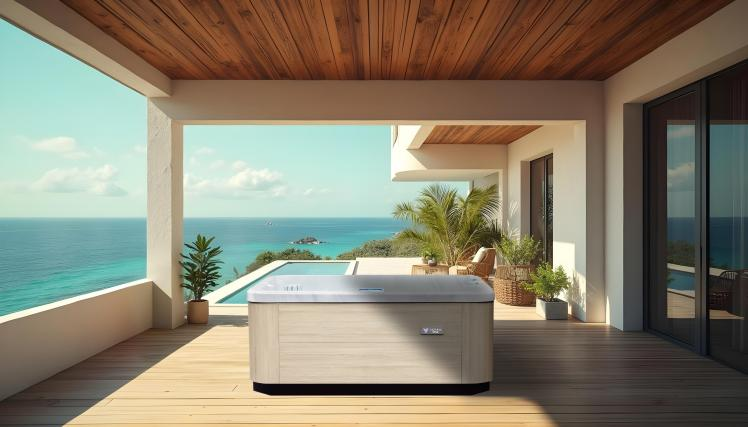
A new hot tub that will not cool down is usually not a failed heater. In most installations the spa is holding heat exactly as designed, and the site gives that heat nowhere to go: the water sits above the intended setpoint, the underside of the cover runs warm, and the equipment keeps cycling when nobody is using the tub.
The opposite problem appears in cold weather. Heat escapes faster than the heating system can replace it, the water drops between sessions, and the heater runs longer than the owner expected. Both outcomes come from the same root cause — a thermal envelope that does not match the place the spa actually stands in.
This article explains how heat retention works in an outdoor hot tub, why placement decisions create overheating and heat-loss problems, and which specification levers prevent them in residential and commercial projects.
Problem Definition: Heat Retention Is a Design Goal, Not a Fault
Heat retention in a hot tub is intentional. The shell, the insulation and the cover exist to slow heat transfer so the integrated heating system does not have to run continuously to hold the water at its setpoint. When a new spa will not cool down, the retention system is doing its job; the siting, the cover routine or the setpoint logic is not.
Three distinct conditions usually get mixed together under that single complaint:
- Thermal retention. The ability of the shell, cabinet and insulation to slow heat movement between the water and the outside air. It is the property that keeps running costs predictable in cold months, and it works in both directions — it also slows heat entering the water from a sun-exposed deck or a warm equipment bay.
- Standby heat loss. Heat escaping while the spa is idle, which forces the heater to cycle more often. This is the cold-weather version of the same problem.
- Heat build-up. Heat accumulating from sunlight, from pump and equipment operation, and from a cover that traps warm air in a sheltered position. This is what most owners describe when they say the water never comes back down.
The diagnostic questions below separate the two failure modes quickly, and they can be answered before a single panel is lifted:
- Is the spa in direct sun for most of the day, or under a dark cover that absorbs heat?
- Is it set into a deck, a semi-inground recess, a courtyard or a rooftop parapet with restricted airflow?
- Does the equipment bay or the deck void feel noticeably warm after a session?
- In cold weather, does the water drop between sessions faster than the use pattern explains?
- Is the cover closed immediately after a long, hot jet session?
Neither failure mode is solved by adding heating capacity. The fix is to align the thermal envelope, the installation mode and the operating routine with the climate the spa sits in. A spa specified for a shaded garden and installed on an unshaded rooftop has not failed; it has been placed in a different thermal environment than the one it was configured for.
Industry Background: Why Heat Retention Became a Specification Question
Hot tubs are now bought as long-life outdoor equipment rather than seasonal accessories, and that shift has moved insulation, heating and cover design out of brochure language and into the specification sheet.
Market size puts the category in context. Fortune Business Insights' 2026 report summary values the global hot tub market at USD 5.76 billion in 2025 and projects USD 8.47 billion by 2034, at a CAGR of 4.28%. Other commercial research providers publish materially different base values for the same period, so the figure is best read as a directional indicator of a growing category rather than a consensus number.
The product mix is concentrated. Acrylic and portable spas accounted for 78.51% of the hot tub market in 2024, according to data reported by ConsumerAffairs and citing Fortune Business Insights. In practical terms, most residential and hospitality projects are specified on an acrylic shell platform, which is why shell construction, cabinet insulation and cover fit carry more weight in energy discussions than the jet count.
Operating cost is the second driver. Industry commentary summarised in 2026 market reporting links smart hot tub adoption to high energy prices and presents remote monitoring as a cost-control measure. That is consistent with the questions that decide a purchase in a pre-order check: how the spa is insulated, how the heater is controlled, what cover is supplied and which certification covers the electrical assembly.
Commercial demand adds a third pressure. Hotels, resorts and wellness centres specify outdoor hot tubs for all-season operation, which means one unit must manage heat loss in winter and heat build-up on an exposed terrace in summer, while staying serviceable for staff who open and close it several times a day.
Detailed Solution: How the Victoria Star Hot Tub Platform Manages Heat
Victoria Star Spa is a wellness equipment brand under Foshan Gaoming Shiyi Sanitary Ware Technology Co., Ltd., a manufacturer based in Foshan, Guangdong, China, producing hot tubs, swim spas, saunas and steam rooms for residential and commercial projects. Its hot tub range — models VS-301C, VS-604L, VS-SP2100 and VS-CP3500 — is specified around the components that decide whether heat stays in the water or stays trapped around it.
1. Multi-layer thermal insulation as the first control layer
Every model in the range is built with multi-layer thermal insulation. The insulation performs two jobs at once: it slows heat escaping from the water in cold conditions, which reduces how often the heater has to run, and it slows heat entering the water from a warm cabinet or a sun-exposed deck. Insulation is therefore not a winter-only feature. A spa with a weak thermal envelope overheats faster in a warm courtyard and cools faster on a cold night, because the envelope is not controlling exchange in either direction.
What insulation cannot do is release heat that is already trapped. If the spa is recessed into a deck with no airflow, or covered immediately after a long session, retained heat has to dissipate through the water surface, the cover and the surrounding structure. Placement and operating routine decide how quickly that happens; the insulation only decides how slowly the water changes temperature in the first place.
2. Integrated heating system and predictable control
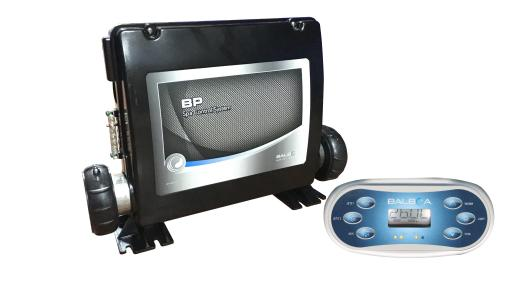
The range uses an integrated heating system rather than a separate external heater, and it is operated through a Balboa Control System or a Gecko Control System. The control platform matters for heat management because it governs when heating and filtration cycles run and what setpoint the water is held at. A setpoint higher than the actual use case — for example a commercial tub held at full residential temperature overnight — keeps heat in the water longer than necessary and makes the will-not-cool-down effect more noticeable.
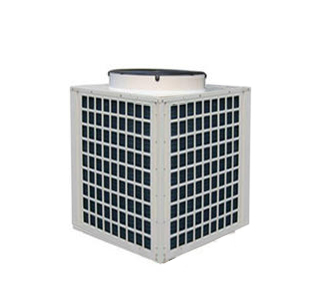
A matched heat pump system is available as an accessory for these spa platforms. It is specified as part of the project equipment set alongside covers, filtration and water-management accessories, rather than treated as a retrofit after commissioning.
3. The cover is part of the thermal envelope
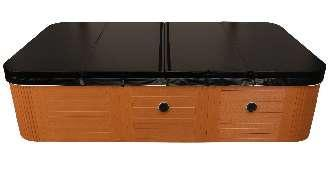
Most heat-retention complaints trace back to the cover rather than the heater. Three cover options are available for this platform: a PU cover, an automatic lifting cover and an automatic roller cover. Each changes the operating routine, not only the appearance.
- PU cover. A fitted insulating cover that reduces surface heat loss and evaporation when the spa is idle. It is the default thermal barrier in cold and mixed climates.
- Automatic lifting cover. Removes the manual handling step, which matters on commercial tubs where staff open and close the spa many times a day.
- Automatic roller cover. Suited to long platforms and higher-use installations where the cover is cycled frequently.
The routine matters as much as the hardware. Closing a cover on water that has just been through a long, hot jet session traps heat that would otherwise leave the surface. In warm weather, leaving the spa open for a period after use is often the simplest way to bring the water back toward its setpoint without touching the controls.
4. Shell material, finish and solar gain
The shell is made from USA imported Aristech Acrylic or Chinese Acrylic sheet, with color options of White, Ocean Blue, Pearl Grey, Cloud Black and Copper. Color choice has a practical thermal consequence in exposed installations: a dark shell and dark cover absorb more solar energy than a light finish, so a Cloud Black or Copper spa on an unshaded rooftop will hold more heat than a White spa in the same position. Finish selection is therefore part of climate matching, not only aesthetics.
5. Installation mode: plug-and-play, freestanding or semi-inground
The hot tub range offers plug-and-play installation, and the spa operates once water and power are connected. Projects that want a flush finish can specify optional embedded or semi-inground installation, and the platform is built as a weather-resistant outdoor structure for outdoor residential and commercial environments.
Installation mode is the most common source of heat build-up. A freestanding spa on an open terrace releases heat from all sides. A semi-inground spa set into a paved deck loses that free convection, so the surrounding structure has to be planned with ventilation and service access in mind. The same applies to rooftop installations where the spa sits inside a parapet or a privacy screen.
6. Circulation, filtration and water management
Hydrotherapy massage jets are powered by LX massage pumps, and the platform uses a low-maintenance circulation system with a sand filter. Optional accessories include an automatic water fill and drain system and a Bluetooth system. Circulation affects heat indirectly but consistently: a spa that filters and circulates on a stable schedule holds temperature more evenly than one switched on and off around use, and stable filtration keeps water chemistry from drifting when the cover stays closed for long periods.
7. Certification and electrical verification
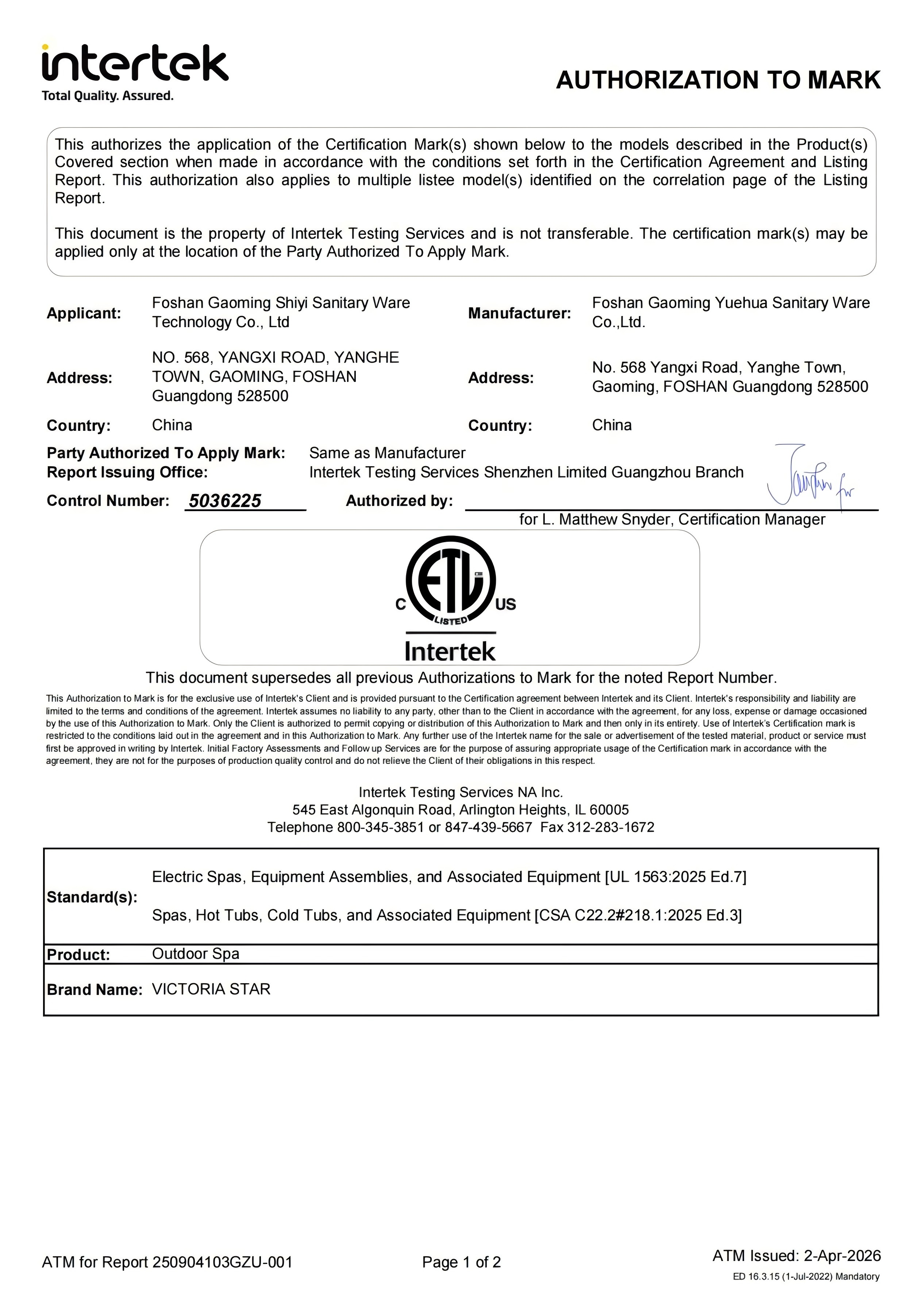
Heat management is an electrical and safety question as well as a thermal one. The outdoor spa and hot tub product holds ETL certification number 5036225, issued by Intertek Testing Services NA Inc. and applicable to the US and Canadian markets. It covers the standards UL 1563:2025 Ed.7 (Electric Spas, Equipment Assemblies, and Associated Equipment) and CSA C22.2#218.1:2025 Ed.3 (Spas, Hot Tubs, Cold Tubs, and Associated Equipment), with an issue date of 2026-04-02. The swim spa platform is separately certified to UL 1563:2025 Ed.7. Victoria Star also states CE and SAA certification for its ranges, covering European and Australian market access.
8. What this platform does not do
Two limits are worth stating plainly, because they decide whether a hot tub is the right product for a project at all.
- No active cooling is described. The published specification covers heating, insulation and control of a hot tub. A buyer who needs water held at 2 °C–15 °C is looking at a different product family: the Ice Tub / Cold Plunge line (IB-001, IB-002), which is built around a rapid cooling system and smart temperature control.
- No published energy-consumption figures. The available documentation does not include kWh consumption data for these models. Projects that require consumption modelling should request test documentation from the factory rather than rely on estimates.
Step-by-Step Breakdown: Preventing Heat Retention Problems Before Installation
The sequence below is the order in which heat-retention risk is best resolved, from site audit to commissioning. Each step closes a decision that is expensive to reopen once the deck is finished.
Step 1 — Audit the site, not just the spa
Record sun exposure across the day, prevailing wind, the surface the spa will sit on, and how enclosed the position is. A courtyard, a rooftop with a parapet, a covered terrace and an open garden are four different thermal environments for the same model.
Step 2 — Choose the installation mode deliberately
Decide between freestanding plug-and-play, embedded and semi-inground installation before the deck is built. Semi-inground and embedded installations need planned airflow and service access around the cabinet, because the structure removes the natural convection a freestanding spa relies on.
Step 3 — Match capacity and dimensions to real use
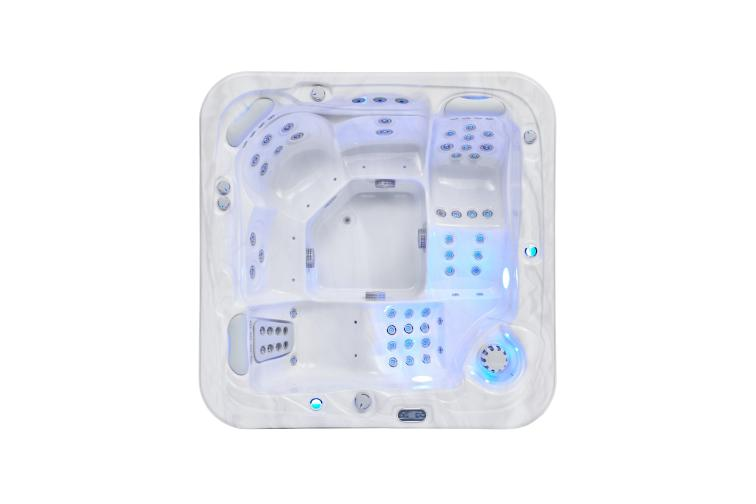
The hot tub range covers 3–7 persons with overall dimensions from 1.8 m to 3.8 m. A larger water volume takes longer to change temperature in either direction, so an oversized spa in a hot, sheltered position holds heat longer, and an oversized spa in a cold position takes longer to recover between sessions. Size is a thermal decision as much as a comfort one.
Step 4 — Fix the control logic before delivery
Confirm which control platform the project will run — Balboa Control System or Gecko Control System — and agree the setpoint schedule for occupied and unoccupied hours. On commercial installations this is where most stays-too-hot complaints are resolved: not by hardware, but by a schedule that matches actual use.
Step 5 — Verify testing and certification before shipment
Production includes 100% pre-shipment water testing and electrical safety testing. Request the ETL certificate copy that matches the exact model and market, and confirm the intended electrical supply matches the certified assembly.
Step 6 — Commission with a routine, not only a startup
At handover, agree three routines: when the cover stays open, when the setpoint is reduced in warm months, and how often filtration cycles run. Remote technical support, installation guidance and spare parts supply are available after delivery, and the spa shell and electrical components carry a 2-year warranty.
Use Cases: Where Heat Retention Problems Appear Most Often
Backyard and garden installations in mixed climates
A freestanding spa in an open garden has the easiest thermal behaviour: heat escapes freely in summer, and multi-layer thermal insulation plus a PU cover limit losses in winter. The main risk is a cover left on through a hot afternoon in direct sun.
Villa terraces and courtyard positions
Courtyard and terrace installations are the most common source of will-not-cool-down reports, because walls and paving reduce airflow and radiate heat back toward the cabinet. Light shell colors, a scheduled open-cover period and a lower warm-season setpoint manage the effect without changing hardware.
Rooftop and screened outdoor areas
A rooftop spa inside a parapet or privacy screen behaves like a semi-enclosed installation. Airflow planning, service access and a cover that is easy to cycle are the practical specification points.
Hotels, resorts and wellness centres
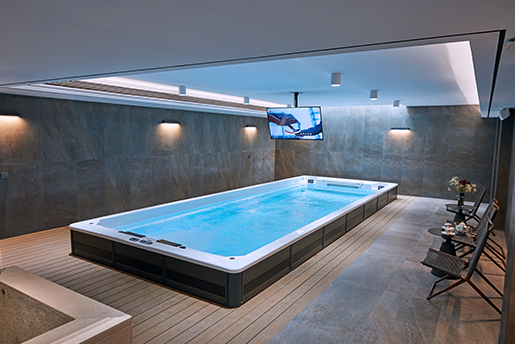
Commercial hot tubs run high duty cycles, with the cover opened and closed many times a day. Automatic lifting and roller covers reduce heat loss per session and reduce handling, while a scheduled setpoint keeps the water at guest temperature instead of holding it hot through unoccupied hours. The platform is specified for the hospitality and wellness and spa industries.
Semi-inground garden and deck projects
Embedded and semi-inground installations achieve the flush look many high-end residential projects want, but they remove the free convection a freestanding spa depends on. Plan ventilation around the cabinet and keep service access clear before the deck is finished.
Comparison Table: Matching the Thermal Response to the Installation
The table maps the conditions that produce heat-retention problems to the specification levers available on the Victoria Star hot tub platform. It compares installation conditions, not competing brands.
| Installation condition | Typical thermal symptom | Specification or operating response |
|---|---|---|
| Open garden, mixed climate | Water drops between sessions in winter | Multi-layer thermal insulation, PU cover and integrated heating system |
| Sheltered courtyard or terrace | Water stays above setpoint in warm months | Light shell color option, scheduled open-cover period, lower setpoint through Balboa or Gecko control |
| Semi-inground or embedded deck | Cabinet area warm, heat dissipates slowly | Planned ventilation and service access, weather-resistant outdoor structure, optional embedded installation |
| Rooftop with parapet or screen | Heat trapped by surrounding structure | Airflow planning, automatic lifting or roller cover for frequent cycling, matched heat pump system option |
| Hotel, resort or wellness centre | Repeated cover removal, heat loss per session | Automatic lifting cover or automatic roller cover, low-maintenance circulation system with sand filter, scheduled setpoints |
| Cold-climate all-season use | Slow recovery, frequent heater cycling | Multi-layer thermal insulation, PU cover, integrated heating system, weather-resistant outdoor structure |
| Requirement for water below ambient | Not covered by the hot tub specification | Separate Cold Plunge line (IB-001, IB-002), 2 °C–15 °C with rapid cooling system |
Verified specification snapshot
| Specification | Published detail |
|---|---|
| Models | VS-301C, VS-604L, VS-SP2100, VS-CP3500 |
| Capacity | 3–7 persons |
| Overall dimensions | 1.8 m – 3.8 m |
| Shell material | USA imported Aristech Acrylic or Chinese Acrylic sheet |
| Acrylic colors | White, Ocean Blue, Pearl Grey, Cloud Black, Copper |
| Thermal control | Multi-layer thermal insulation with integrated heating system |
| Jets and pumps | Hydrotherapy massage jets powered by LX massage pumps |
| Control system | Balboa Control System or Gecko Control System |
| Installation | Plug-and-play installation available; optional embedded or semi-inground installation |
| Certification | ETL number 5036225, Intertek Testing Services NA Inc., US and Canadian markets; UL 1563:2025 Ed.7 and CSA C22.2#218.1:2025 Ed.3 |
FAQ: Heat Retention, Specifications and Sourcing
Is the Victoria Star hot tub certified for US and Canadian installations?
Yes. The outdoor spa and hot tub product holds ETL certification number 5036225, issued by Intertek Testing Services NA Inc. and applicable to the US and Canadian markets. The certification covers UL 1563:2025 Ed.7 for electric spas, equipment assemblies and associated equipment, and CSA C22.2#218.1:2025 Ed.3 for spas, hot tubs, cold tubs and associated equipment, with an issue date of 2026-04-02. The swim spa platform is separately certified to UL 1563:2025 Ed.7, and Victoria Star also states CE and SAA certification for its ranges. Buyers should request the certificate copy that matches the exact model and destination market, because certification applies to a defined product scope rather than to a brand name.
Can one hot tub be configured for both cold winters and hot summers?
The platform is specified for outdoor residential and commercial environments with all-season operation capability. The thermal side is handled by multi-layer thermal insulation, an integrated heating system controlled through a Balboa or Gecko Control System, and a choice of PU, automatic lifting or automatic roller cover. Installation can be freestanding plug-and-play or optional embedded and semi-inground, and the structure is weather-resistant. Two limits should be understood: the published specification describes heating rather than active cooling, so in a hot climate heat management depends on siting, shading, cover discipline and setpoint scheduling; and projects needing water at 2 °C–15 °C are served by the separate Ice Tub / Cold Plunge line rather than by a hot tub.
What drives the cost of an energy-efficient hot tub configuration?
Cost is configuration-driven rather than model-driven, and no fixed price band applies across the range. The variables that move a quotation are the capacity and dimensions (3–7 persons, 1.8 m to 3.8 m), the shell material (USA imported Aristech Acrylic or Chinese Acrylic sheet), the control platform (Balboa or Gecko), the cover type (PU, automatic lifting or automatic roller), optional matched accessories such as a heat pump system, automatic water fill and drain system, sand filter and Bluetooth system, and any customization of dimensions, jet configuration, acrylic colors, lighting systems, control systems or skirt colors. A buyer comparing quotations should compare them line by line on these variables, because an insulation or cover difference changes lifetime running behaviour more than a jet-count difference does.
Can a buyer validate a single unit before committing to a project order?
Yes. Minimum order quantity for the hot tub range is 1 set, so a single spa can be ordered as a validation unit before a larger project or distribution order. Every unit goes through 100% pre-shipment water testing and electrical safety testing at the factory in Foshan, Guangdong, China. After delivery, remote technical support, installation guidance, spare parts supply and online troubleshooting support are available, and the spa shell and electrical components carry a 2-year warranty.
How long does delivery take once a configuration is confirmed?
Lead time for the hot tub range is 35–70 days, depending on the configuration and the customization involved. Production capacity is 600 sets per month, and the factory operates a 50,000 m² facility with more than 250 employees and a 35-engineer R&D team, exporting to Europe, North America, Australia, the Middle East and Southeast Asia. To confirm a slot, share the model, capacity, cover choice, control platform and destination market so the configuration and certification scope can be checked together — you can send the project details through the Victoria Star website, by email at info@victoriastarspa.com, or by WhatsApp at +86 13925955886 to request a quotation and the 2026 outdoor spa and sauna collection.
Conclusion: Match the Envelope to the Site and the Problem Disappears
A hot tub that will not cool down is rarely a manufacturing defect. It is a mismatch between a thermal envelope designed to hold heat and an installation that gives that heat no route out — a courtyard, a rooftop screen, a semi-inground recess, or a cover closed on water that was already at its hottest. The same mismatch, read the other way, produces heat loss and long heater cycles in cold weather.
The practical resolution is consistent across climates: specify multi-layer thermal insulation and an integrated heating system as the baseline, choose the cover type against the real operating routine, treat shell color and installation mode as thermal decisions, and set the control schedule to match how the spa is actually used. Certification then confirms that the electrical assembly is acceptable for the destination market — ETL number 5036225 for the US and Canada, with CE and SAA also stated for the range.
Buyers who need water held below ambient temperature should look at a cold plunge product rather than a hot tub, and buyers who need published kWh figures should request test documentation before ordering. Those two qualifications are what make the rest of the specification trustworthy.
Next step: sample unit, quotation or full catalogue
Victoria Star supplies hot tubs, swim spas, saunas and cold plunge products to residential, hospitality and distribution projects. Minimum order quantity is 1 set, lead time is 35–70 days, and every unit is water-tested and electrically tested before shipment.
Download the 2026 New Collection (Outdoor Spa & Sauna) catalogue, or contact the team at www.victoriastarspa.com · info@victoriastarspa.com · +86 0757-88233718 · WhatsApp +86 13925955886.
Have Questions or Need More Details?
Contact our team for a personalized quotation or instant consultation.
Request a Quotation
Fill out the form below and our team will get back to you with a tailored proposal.
WhatsApp Direct Chat
Prefer to chat in real-time? Message us on WhatsApp for instant assistance & quick answers.
- Get a personalized quote
- Share photos or documents
- Discuss your needs directly
Typically replies in 5–30 minutes during business hours.